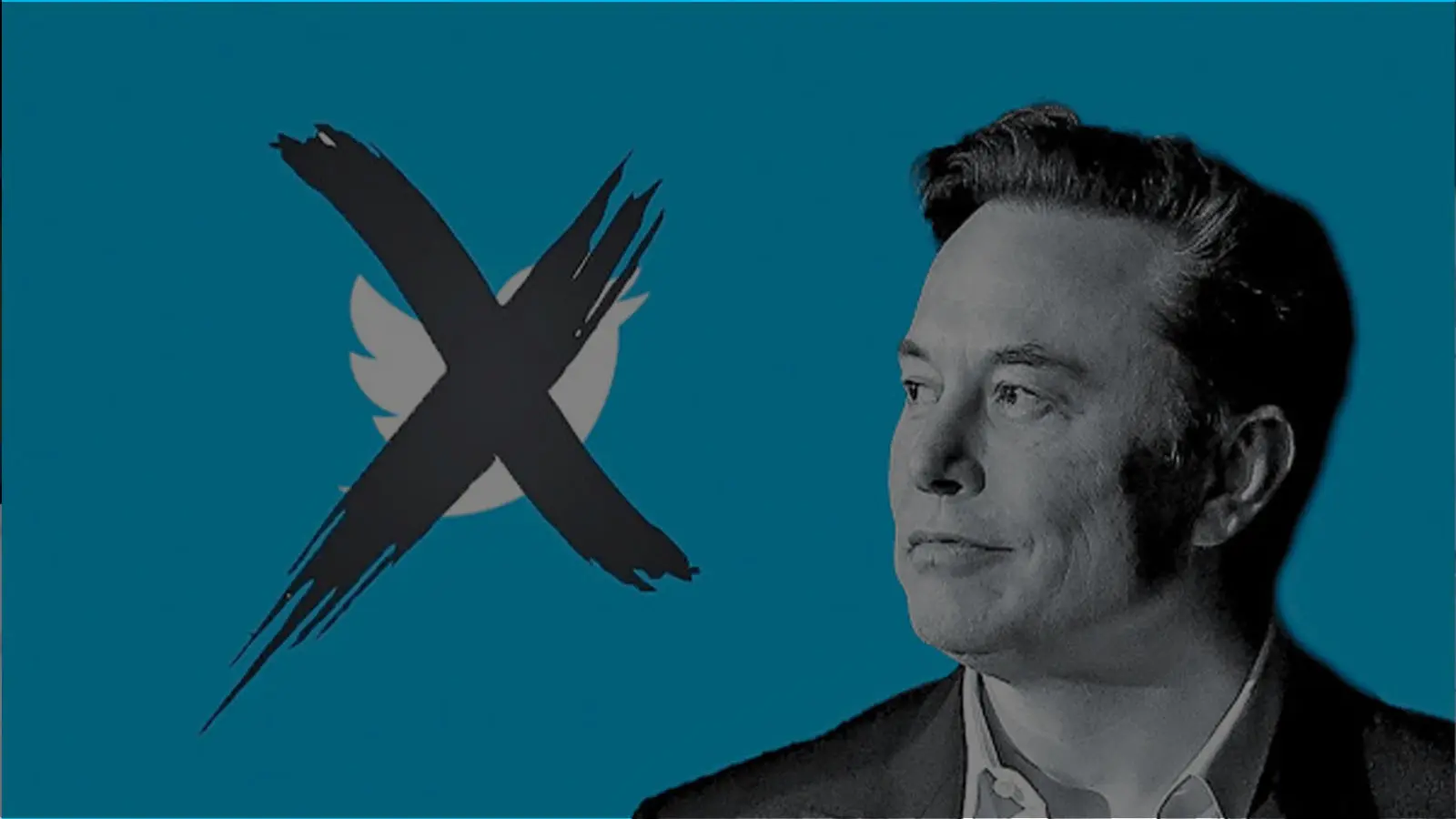
Elon Musk, who can impact major industries, including crypto, with just a tweet or an interview, has now turned his attention to the Anti-Defamation League (ADL).
Elon Musk’s New Controversy
This isn’t the first time that Elon Musk, the tech giant, has grabbed the world’s media attention with a single tweet, disrupting various narratives and creating a serious stir. However, this time, Musk has touched on a more sensitive issue: a public battle with the Anti-Defamation League (ADL).
Elon Musk, the controversial entrepreneur and CEO of Tesla and SpaceX, has gained global fame and has previously been called a “mad genius” and the “biggest Twitter troll” by the media. As the world’s richest person, he is undoubtedly one of the most influential figures in the cryptocurrency industry.
On September 5, 2023, Elon Musk announced on Twitter, the platform he recently acquired and rebranded as X, that he plans to sue the ADL for defamation.
Initially, he tweeted: “To clear our platform’s name of antisemitism, it seems we have no choice but to file a defamation lawsuit against the Anti-Defamation League. Quite the ironic situation!”
Musk, emphasizing that he is a strong advocate of free speech while also firmly against any form of antisemitism, threatened to sue the ADL, blaming them for X’s loss in ad revenue. In another tweet, he wrote: “If this keeps up, we’ll have no choice but to file a defamation lawsuit against the Anti-Defamation League. If they lose the defamation suit, we will insist they drop the ‘Anti’ from their name, as obviously…”
In response to a user who questioned his stance, Musk claimed that the ADL had been trying to destroy the platform by falsely accusing him of antisemitism. He also referred to the ADL as an illegal and hate-filled organization.
Elon Musk’s Claim of Reduced Ad Sales on X
Musk claims that criticism from the ADL has led to a significant 60% drop in ad sales, causing “irreparable damage” to his company, X. He argues that advertisers, under pressure from the Anti-Defamation League, have been forced to cut their advertising partnerships with the platform. Rejecting the ADL’s accusations of antisemitism, Musk sees a legal lawsuit as the only remaining way to defend himself and protect the reputation of his company. He even suggested that the ADL is scheming for half the value of X, which is approximately $22 billion.
Musk also pointed out that the ADL has exerted this pressure on Twitter for years, and now, after his ownership, they have made it public. He added that this behavior isn’t limited to Twitter, and it’s likely that the ADL exerts similar control and pressure over all major social media platforms and Western search engines.
He emphasized that the ADL holds much less influence in Asia, where X’s advertising revenue remains strong. However, in the U.S. and Europe, the ADL’s influence has caused a steep decline in ad revenue due to the false accusations they’ve made. Musk explained that since advertising companies usually avoid controversy, they’ve complied with this pressure.
In response, Jonathan Greenblatt, CEO of the ADL, defended the organization’s stance on fighting antisemitism and bias, dismissing Musk’s claims as mere “threats of a frivolous lawsuit.” This public clash and the conflicting claims have raised eyebrows, leading many to question whether there are deeper issues or hidden agendas at play between these two powerful figures.
The Beginning of the Dispute

To understand this legal battle, it’s helpful to look at the timeline of events: In August 2023, the Anti-Defamation League (ADL) released a report accusing X of allowing unchecked antisemitic content on its platform. The ADL even called for advertisers to boycott X. On September 5, 2023, Elon Musk tweeted about his intention to sue the ADL. The next day, on September 6, the ADL rejected these accusations, calling the lawsuit a “frivolous case.” Later that day, at 2:48 AM Israel time, Jonathan Greenblatt, CEO of the ADL, made his first public comment on the matter.
Musk also shared links to two reports on Twitter. The first was a 2020 article from Tablet Magazine pointing out the ADL’s role as a major supporter of Al Sharpton, a U.S. politician with a controversial history, including his involvement in the Crown Heights riots, which resulted in the death of a Jewish man. The report also highlighted significant changes in the ADL since Jonathan Greenblatt, a former Obama aide, took over as CEO in 2015.
The second link was a 2020 Politico article that referenced the ADL as one of the leading forces behind an ad boycott against Facebook. Musk, while sharing the link, commented: “Facebook caved to far-left pressure groups, allowing them to dictate their policies in exchange for ad dollars.”
This isn’t the first public clash between Musk and Jonathan Greenblatt. Previously, Musk was accused of antisemitism after comparing George Soros, the Jewish billionaire, to Magneto, a villain from comic books. In response to criticism, Musk tweeted: “You assume he’s well-intentioned, but he is not. He wants to erode the fabric of civilization. Soros hates humanity.” Later, in an interview with CNBC, Musk defended his remarks about Soros, stating, “I say what I want, and if the consequence is losing money, that’s fine.”
In August, Musk also sued the Center for Countering Digital Hate (CCDH), a watchdog organization, accusing it of making “false claims” about a rise in hate speech on X since his acquisition of the platform.
A Review of the ADL Background
Understanding the public dispute between Elon Musk and Jonathan Greenblatt requires some context about the Anti-Defamation League (ADL). This organization, whose activities have expanded beyond its original mission, has grown into a powerful international lobbying group with influence in political, economic, and cultural spheres.
The ADL was founded in 1913 by a Jewish organization named B’nai B’rith. The ADL’s primary mission is “to stop the defamation of Jews through education, public influence, and, if necessary, legal action.” Today, the ADL operates 29 offices in the U.S. and three abroad. The organization describes its broader goal as “ending unjust, unfair discrimination and mockery of various sects,” while also seeking “fair treatment and the guarantee of justice for all people.”
B’nai B’rith, which founded the ADL, is the oldest Jewish organization in the world. It is committed to the Jewish people’s safety, combating antisemitism and prejudice, and ensuring the security of Israel. B’nai B’rith views itself as a representative of Jewish interests, defending Jewish communities and enhancing their well-being, collective identity, and religious values.
The ADL has directly supported Israel and opposed resolutions such as the 1975 United Nations resolution that equated Zionism with racism. In practice, the ADL has become a pro-Israel lobbying force in the U.S., often labeling criticism of Israel as antisemitic.
Over the years, the ADL has filed numerous lawsuits against individuals and entities, accusing them of antisemitism. Through its widespread lobbying efforts, particularly in the media and advertising industries, the ADL aims to regulate the content on various platforms. Its methods include imposing hefty fines or gaining significant control over content in media, publishing, advertising platforms, social networks, and even Hollywood. Some examples include the lawsuit against Press TV on YouTube for allegedly using the channel to “promote and spread harmful antisemitic theories in English to a broad audience.” Pressuring Facebook to remove a political ad created by Donald Trump’s campaign. Applying pressure on Facebook to take down anti-Israel content. Attacking Norman Finkelstein, historian and political science professor, for his opposition to Israeli policies. Canceling a speech by Tony Judt, a Jewish historian at New York University, due to his anti-Israel stance. Conducting a campaign against Jimmy Carter over his book Palestine: Peace Not Apartheid. Filing complaints against John Mearsheimer and Stephen Walt for their book The Israel Lobby and U.S. Foreign Policy. Pressuring Hollywood actors like Marlon Brando and Mel Gibson for comments about Jewish control in Hollywood. These are just a few of the ways the ADL has confronted critics of Israeli policies over the years.
What Will Be the Outcome of the Dispute?
Musk’s lawyers have not yet responded to the media regarding whether they will file a lawsuit against the Anti-Defamation League (ADL). However, regardless of whether this legal battle continues, it is clear that the clash between Elon Musk and the ADL raises bigger questions. Do civil rights organizations like the ADL have the right to make such extreme criticisms that ultimately lead to censorship and the restriction of free speech? Is the ADL’s attack on Musk, under the pretext of antisemitism on the X platform, a means to control the content of this influential social network and impose their policies, as they did with Facebook and its advertising?
While we must wait for further developments and statements to answer these questions, the key aspect of this controversy is the involvement of two highly influential figures on opposite sides. On one side is the ADL, a powerful organization that has filed numerous lawsuits and launched attacks against various individuals, often leveraging the outcomes to serve its political and non-political agendas. On the other side is Elon Musk, the world’s richest person, who, unlike many in his industry, embraces controversy and public disputes. We have previously seen Musk’s ability to impact major industries, such as cryptocurrency, with just a few tweets or interviews. Now, he has taken on an organization that few have dared to engage in a legal and public dispute with. It remains to be seen whether this conflict will result in a legal victory for either side or if both parties will settle for a psychological battle to advance their own interests.